

This is not another blog post telling you how to use AI to grow your business quickly or while you sleep. It’s also not a post shaming you for using AI. Instead, I’ll share my experiences of using AI in my small business with intention.
In making considered choices, and most of all, to keep coming back to how using it makes us feel, what it means for our business and our trust in ourselves.
Join the newsletter for more like this
Sign up with your email address to receive strategies, experiments and tips to create a slow, gentle and profitable business–no hustle, no hacks.
Two sides of the AI-debate
In reality, most of us are probably somewhere in between “AI is evil” and “AI is everything”. It’s become so very easy to use AI, and in some cases virtually impossible not to. And in the midst of all the noise we might feel like we are missing out if we don’t use it (the hacks-approach), or guilty if we do. Or both.
Regardless of all the many reasons not to use AI, and the many reasons to use it, what you decide is of course up to you. The only thing I care about is that you decide on your own approach and perspective—both as a consumer, and as a creator of things, whether you’re a small business owner, freelancer or artist.
By now, I think we all know the reasons not to use AI. It disrespects copyright: LLMs are trained on texts gained without the authors’ permission (much of my academic work is on that list too), and cannibalizes creative work. AI plays hard and fast with our privacy, and is often untransparent about how it uses the data we share with it. Training and using AI takes many, many natural resources.
And then there are the reasons to use it. It makes things easier: instead of going through search results ourselves, the answer is right at the top of the screen. It can be an equalizer for people writing and communicating in a second (or third, or fourth) language, and I know of neurodivergent people who use it to interpret written communication. It’s good at identifying patterns in sets of data too large for us to interpret.
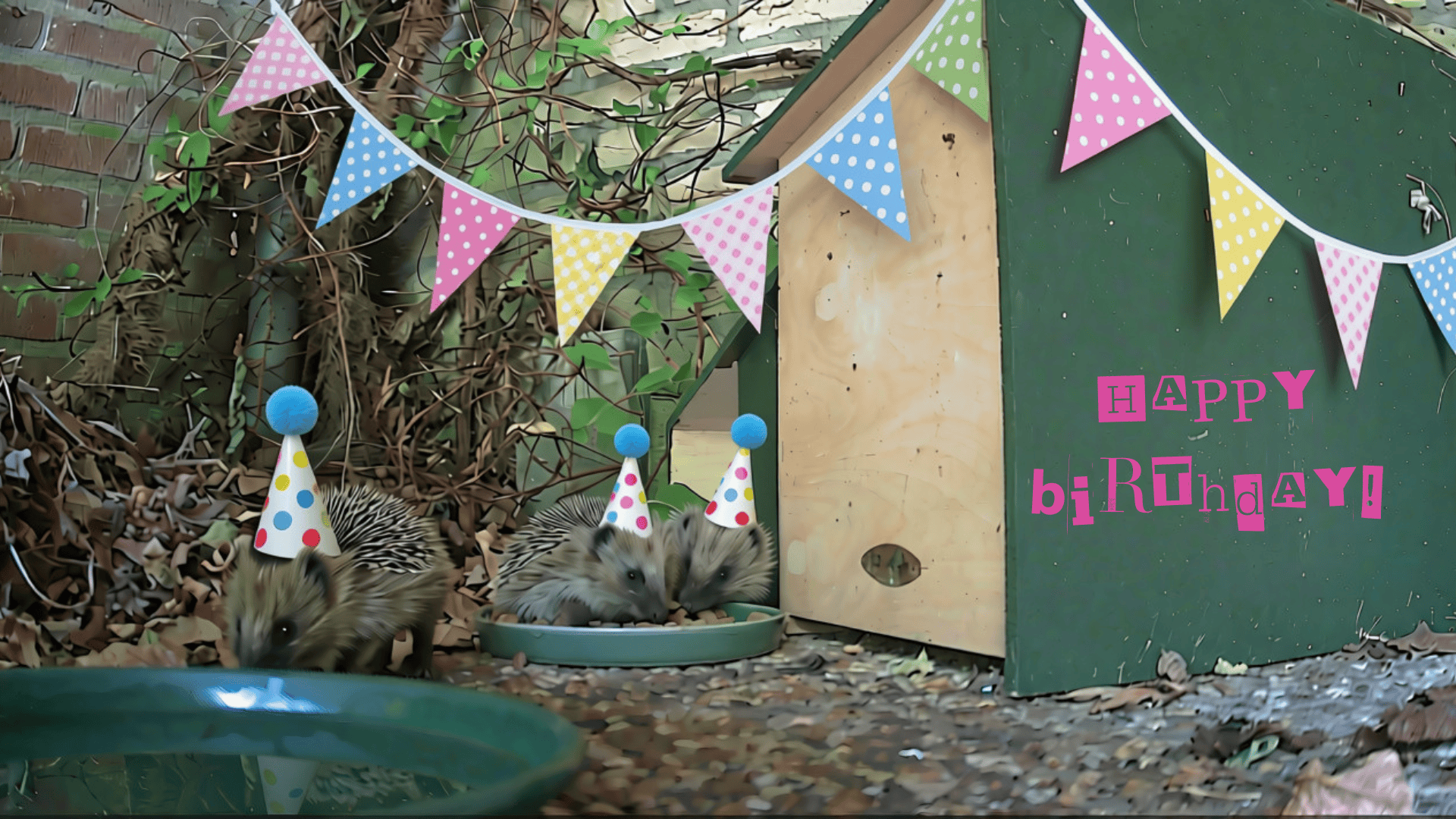
And it can just be fun, for instance when turning a picture of baby hedgehogs from the garden into a birthday card >>>
When AI works well in a small business
Over the past couple of months, I’ve used AI to identify patterns in my newsletters; research options for studio lighting that fit in with my (modest) ambitions for my YouTube channel; tell me how titles for newsletters and blogposts do in terms of SEO/GEO/AEO; create the above-mentioned birthday card; identify patterns in my sleep and stress; and help me sharpen the “hook” for my videos.
Two experiences stand out to me: identifying patterns, and my experiences with the AI-advisor in the Oura-app.
I’ve recently become a contributor to Forbes entrepreneurs, which has been a fun new experience. But when I submitted the contributor questionnaire for this, I drew a complete blank on potential topics. I suddenly felt I had no ideas, and never had.
I gave Claude a list of all the newsletter titles and topics I’d written since 2022 and asked it to distill patterns, themes and topics. While I obviously won’t be using the exact same newsletters for Forbes, seeing that list inspired me anew, and got me unstuck.
Why this worked is because Claude did something quicker than I would be able to and, importantly, because I could check that what it was saying was true. If it had suggested that “sales hacks and tactics” was one of my key themes, I would immediately know it was wrong.
Of all the AIs out there, I probably use the advisor in the Oura-app most frequently. The thing I love most: it always tells me that how I’m feeling is the most important metric. My sleep might be bad or good, I might have had a lot of stress or very little—but what it comes back to again and again is how I’m feeling.
For me that hits at the heart of how we ought to engage with AI. To not take whatever it says as gospel, to not take its answers as the only right thing—but to ask ourselves how we feel when we’re using it, and how we feel about the responses we’re getting.
What AI doesn’t know about your business
What made my experiences with Claude and the Oura-advisor valuable wasn’t so much what they did—it was how I responded to it and engaged with them. I never handed the decisions I made over completely to them.
The certainty with which AI presents things can be so alluring. Unless you specifically prompt an AI, it will never tell you that it’s not sure. And if you’re feeling insecure or out of your depth, that certainty is what we want.
For instance, when I started my YouTube channel, I had very little experience creating videos. After a video or two, I played with YouTube’s AI, asking it to come up with topics that would appeal to my audience. The ones it came up with would be popular and a good idea for my channel, it said. But when I tried to go with them, it felt off. The ideas somehow felt lifeless. Yes, they might be popular, and yes, it would be great to have more views. But these topics weren’t mine. The reason why I explored them was because I was in a space of uncertainty and doubt. I was feeling out of my depth, and YouTube’s AI seemed to offer certainty.
Now that I’m 11 videos in, I notice that the AI has gotten slightly better. When I checked its topic suggestions just now, I noticed they were much more on brand. And that is because it’s had more to work with.
Like us humans, AI doesn’t know what it doesn’t know. And what it doesn’t know first and foremost is your business, your values and your vision. It can’t do the feelings-check that is so important for us if we want to show up with intention and like ourselves.
Questions to come back to when using AI
Next time you’re using AI for something in your business, ask yourself these questions:
- What is the question I’m really asking? What am I looking for when I’m asking AI something? What am I hoping this saves me: time, effort, or uncertainty?
- How do I feel about this? What does my intuition say?
These are two questions I come back to frequently. I also wrote my own AI-manifesto last year, setting out what is important to me—and what my audience can expect of me.
Workshop: Trusting yourself in the age of AI
My new workshop offers something that I was missing in the whole AI-debate: not whether using it is good or bad, but how we root into our own trust and judgement while using it.
Using AI can lead to a particular way of outsourcing your business—and while in some areas that can be fine (like pattern detection), it can also lead to an erosion of trust in yourself, and a disconnect from your business.
Intention, clarity and trusting your own judgement are at the heart of this workshop. You’ll create your own parameters for the role of AI in your business, as I guide you through a spectrum of approaches (from no AI to full AI), mapped onto your own business. We’ll not just be looking at content-creation, but at admin and communication as well—and for every step I’ll list non-AI alternatives to try too.
Like this post, the workshop won’t tell you whether to use AI or not, engage in prompt engineering or hacks. Instead, it helps you use AI as a tool if you want to, in a considered, intentional way, while always coming back to the thing you know most about (and AI least): your business.
Details and getting access
→ 35-minute recorded workshop, with workbook and slides for you to download;
→ Self-paced;
→ Lifetime access if you buy it standalone, otherwise included with a paid subscription to my newsletter as long as you’re subscribed.
I’d love to know what resonates with you from this post.
Please feel free to share this post it with business friends, in your newsletter or elsewhere. 💛
I’d love to support you in all phases of your business. Providing clarity, focus and next steps is something that my clients tell me I’m really good at. If you’re curious about how we can work together through 1:1 mentoring, check out what I offer or send me an email–no strings attached. I have payment plans available, and flexible options for mentoring calls.
Join the newsletter for more like this
Sign up with your email address to receive strategies, experiments and tips to create a slow, gentle and profitable business–no hustle, no hacks.