

Do you need a niche to run a successful small business? Not necessarily. If you’re multipassionate, you can build a business that holds all of your interests and ventures. The confusion people warn you about rarely comes from doing more than one thing in your business. It comes from how you present it.
Maybe you burned out in previous jobs because one role never excited you enough. And now that you’re running your own business, the same voice pops up: focus on one thing, or you’ll confuse your customers. But when you try to be just the one thing, it feels like you’re ignoring a vital part of yourself.
If that’s you, this post is your permission slip to stop forcing yourself. I’ll share why I never tell my clients to niche, how to bring your different pursuits together under one umbrella, and how to market them without confusing anyone, or burning yourself out.
Join the newsletter for more like this
Sign up with your email address to receive strategies, experiments and tips to create a slow, gentle and profitable business–no hustle, no hacks.
Prefer to watch a video? Here’s the video version
Why niching may not be for you

Struggling to unite different pursuits in one business is something that comes up so frequently in my work with small business owners. They come to me sharing all that they do and want to do—but also share the reasons why they can’t be all of that in one business.
How they’ve been told, often all their lives, that they need to focus more. How they can’t move from one project to the next without finishing the first. How they need to finally stick with just one thing.
And this refrain is only added to in much business advice. The business gurus have told them to niche. They’ve learned that they need to be known for one thing that’s easy to remember—not for two or three different things.
But the cost of forcing yourself to do one thing, to be one thing, is high. You get bored and unmotivated. Your business starts to feel like a slog. You risk burning out trying to hide the other parts of you.
Your permission slip
Just as your business needs to support your personal life, it needs to support all of your professional identities too. One concept I often try out with clients is seeing their business as an umbrella—an umbrella that can hold many different things. The umbrella is not “coach” or “teacher” or “copywriter”. The true umbrella is you—with all the different parts of you, whether those parts are “coach”, or “teacher”, or “copywriter”, as part of you.

You don’t have to cut yourself down to fit your business. Your business can be shaped to fit you.

Yet even if all of this has you nodding your head, you’re probably still stuck on one thing: “Won’t people be confused about my different roles and pursuits? What if they’re looking for a coach and land on my website and find a singer instead? Will I ever make sales being different things?”
This voice is the voice of the business gurus. And what they often don’t mention is that your potential customers won’t be confused by the fact that you do different things—they’ll probably find that interesting—but how you show it. If there’s any confusion at all, it’s caused by how you present it, for instance on your website.
But really, most of the time the problem is primarily in our head. In feeling like we don’t have the permission to follow all of those pursuits. In feeling completely stumped about how to explain, market, sell those different parts. And in doing that in such a way that you’re not burning yourself out with too much work.
How to build a multipassionate business in practice
When I speak to small business owners about bringing all of their interests and passions together, there are three areas we most often talk about: time, money and marketing.
Time
Much like if you are balancing a business with care responsibilities, or with a 9-to-5, you’ll have to figure out when to spend your time on what. Some people like a very loose approach to this: they are motivated primarily by what they feel most energy for and go with that.
If you need a little more structure, you can think about allocating certain days in the week to certain parts of your business–or even certain weeks in the month. Perhaps your own energy rhythms determine what feels good to do when. Or, parts of your business might be really seasonal: perhaps you sell Christmas ornaments around the holidays, and spend the rest of the year on another part of your business.
Money
You might worry that if you have several different parts to your business, you’re halving your income. But the opposite can be true: having multiple income streams can offer more financial stability and security. When income is low in one part, you can focus more time and energy on another to bring more money in. While I pretty much do one thing in my business–offer mentoring to small business owners and creatives–I do so in several ways: through 1:1 mentoring, courses, programmes and workshops. When the 1:1 mentoring is slower, a programme or course can make up the shortfall.
Marketing
“How do I market my multipassionate business?” is probably the question I am asked most frequently in this context. How do you prevent confusion with your audience, and how do you prevent running yourself into the ground marketing all of those different parts?
A key question for marketing different ventures or pursuits is: how can I do this with as little work as possible? You might think that if you have two different parts of your business, or three, or four, you need to double or triple your marketing. But soon, that’ll leave you only marketing.
Instead, be very intentional with your marketing and with the channels you choose. You might even use a specific channel for one part only–for example, if that part of your business is very local, Facebook can be a great platform.
If you’re worried that your audience might be confused when they land on your website and see that you teach yoga classes and are a ceramist, take a deep breath. Usually, people like to see what else someone is doing. Your other pursuits might actually add to how interesting you are to them, rather than confuse them. The trick is to present your different ventures in a clear manner, so that your audience knows where they can go for what.
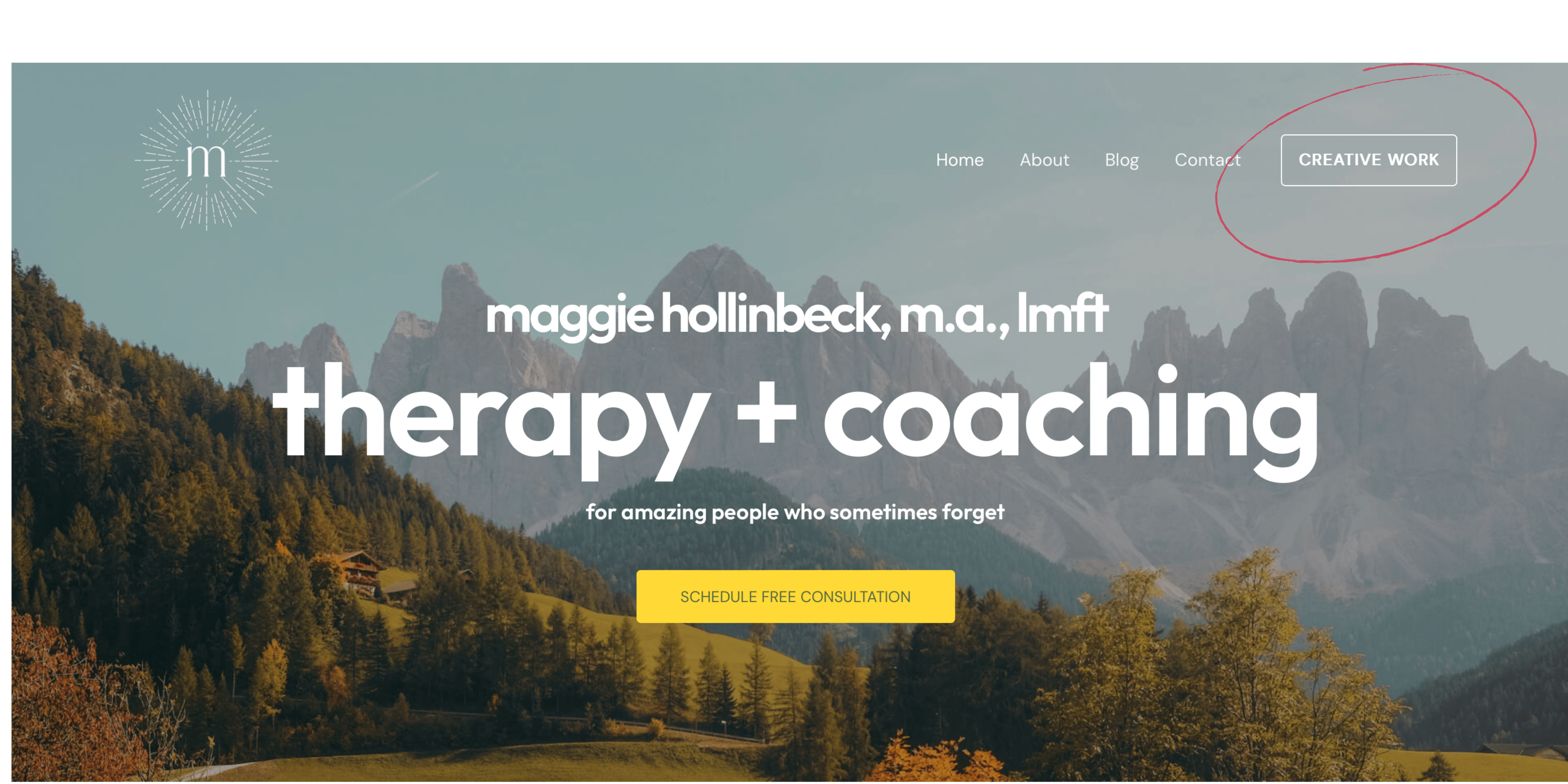
For example, if you go to Maggie’s website, you’ll see that she works both as a therapist, and as a musician. She’s made it easy for visitors to identify what they need, and to click through.
Sarah, of the letterpress stationery business Sarah + Maude, also allows her website visitors to choose which newsletters they want to get.
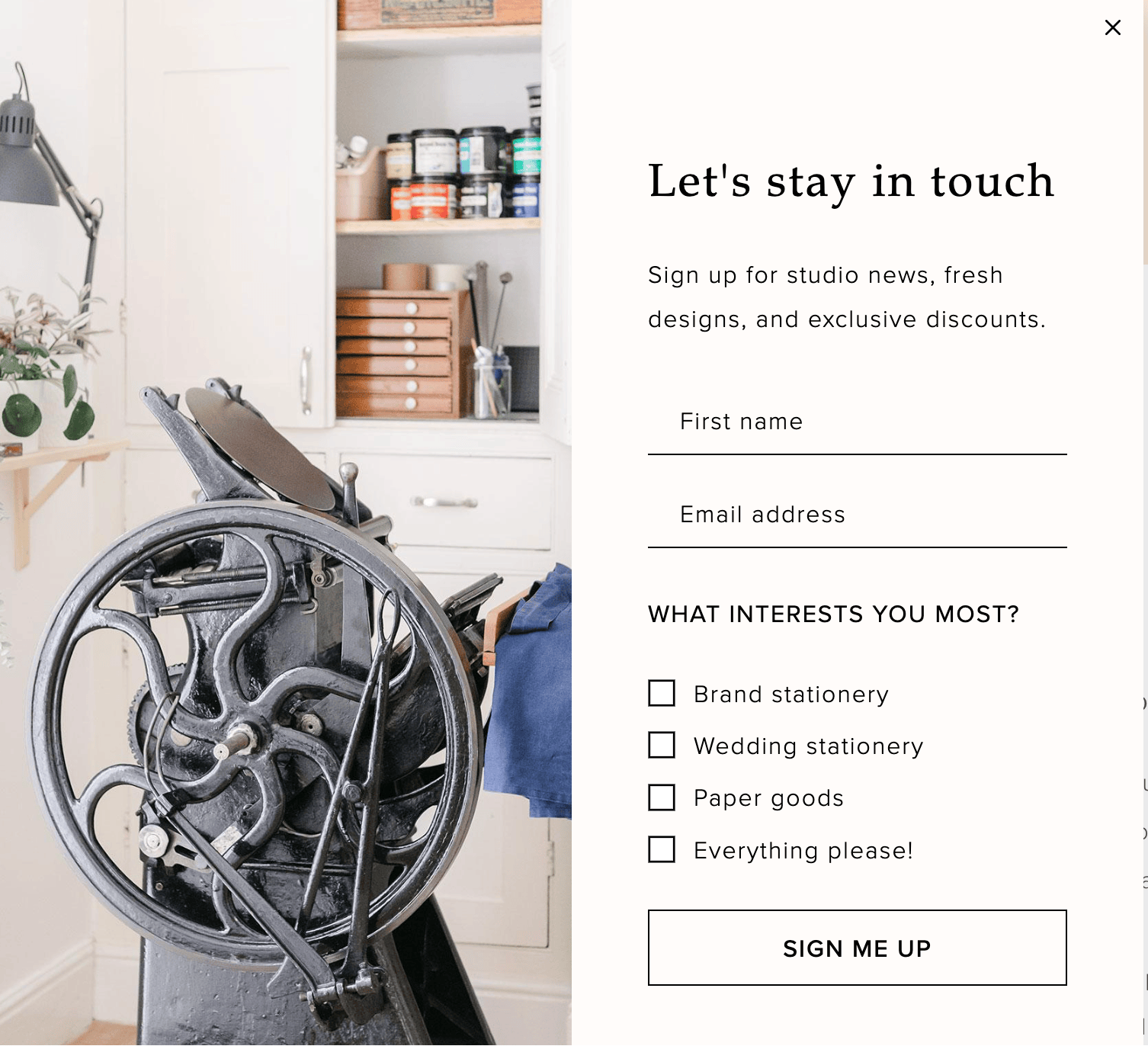
Both of these small business owners also show that you can unite all of your pursuits in one business: whether that means including several parts on one site, or allowing your audience to self-select what they want to hear from you.
What I do instead of telling you to niche
I never tell people to niche. Instead, I help them do justice to all the different parts of their business, and support them, practically and mentally, to embody, share and sell all of it.
That starts with really getting to know someone. Before a first call, I’ve already gone through a client’s website, offers, about page and newsletter, and read their onboarding questionnaire. By the time we meet, I can see how they present themselves and their offers, and where any confusion or unclarity creeps in.
I don’t start out telling clients what to do. Instead, I ask questions to discover what’s behind their business, and behind their struggles. Sometimes this is when I can reflect back that perhaps the different parts of their business aren’t that different after all. At other times, I help them see how those parts can simply exist side by side, underneath the umbrella.
Either way, the purpose is to help them feel less fractured and stronger in all the different things they do. From there, we make practical plans for a business that holds all of it, from marketing and selling to making time for each part. I leave plenty of room to think, to tweak, to change your mind, while I keep the bigger picture and your goals in view.
“During our call, I got a lot of clarity through the pointed questions Astrid asked—both about the practical steps and about why I wanted something.” — Ruth Werwai, founder of Raincloud and Sage
Shaping a business that fits you
If you’re tired of cutting yourself down to fit your business, I’d love to help you shape a business that fits you instead. For this kind of work, where things need time to settle, my 3-month 1:1 mentoring package is the best fit. You can book a 20-minute chemistry call, with no strings attached, or simply email me to talk through what you need.
“I was looking for guidance with balancing my writing with plans to build a coaching business. But then our sessions turned into coaching for launching my very first coaching cohort!”
— Kailey DelloRusso, author and coach

What I do instead of telling you to niche
I never tell people to niche. Instead, I help them do justice to all of them, and support them practically and mentally to embody, share and sell all of it.
—
How I work with small business owners, freelancers and creatives just like you is rooted in really getting to know you, asking lots of questions, and offering strategies and accountability.
Before we first speak, I’ve already gone through new clients’ website, offers, about-page, as well as a Substack newsletter or any other channels.
I thoroughly read through the onboarding questionnaire. By the time I meet up with clients for the first time, I have a pretty good idea of who they are, and what’s important to them. I can already see their strengths and challenges, how they present themselves and their offers. And I spot any confusion or unclarity too.
Clients often tell me this preparation puts them at ease: “Astrid was so well prepared, which really put me at ease and helped me enjoy the process,” Sarah Robertson wrote after her call.
I don’t start out telling clients what to do. Instead, I ask questions to discover what’s behind their business, behind their struggles. Sometimes, this is the point when I’m able to reflect back to them that perhaps the different parts of their business aren’t that different. And at other times, I help them see how the different parts can simply exist side-by-side, underneath the umbrella.
Either way, the purpose is to help them feel less fractured, to feel stronger in all the different things they do. And then we can start making practical plans to truly bring a business to life that encompasses their different pursuits, from marketing and selling, to making time for all of it.

“During our call, I got a lot of clarity through the pointed questions Astrid asked—both about the practical steps and about why I wanted something.” — Ruth Werwai, founder of Raincloud and Sage

I leave plenty of room to think, both during the call itself, as well as afterwards. To think about the plans we make together, about the strategies I suggest. It’s important to me that my clients create the business, the product, the service that truly fits them—not me. There’s room to tweak, to change their mind, while I keep the bigger picture and their goals in mind. I gently challenge them and keep them accountable, both through the detailed notes I send after each call and through email or voice message in between the calls.
I returned to working with Astrid when I had a lot of decisions to make. It’s great to have her alongside me as I weigh options according to what’s right for me and what I want for my clients. I’m a solopreneur, so it’s invaluable having Astrid’s insights, wisdom and support along the way. — Cynthia Morris, book coach and author

An invitation to you
I recently started working with the lovely Betina Cunado, who explained her decision to work with me as follows: “of all the business and Substack coaches, you are the one I always come back to”.
If you’ve been coming back to my words too, I’d love to invite you to check out my 1:1 mentoring offers. For the kind of work that requires things to settle, to shape or reshape your business, my 3-month package of 4 calls is the best fit.
We can have a 20-minute chemistry call to talk through what you need and whether it matches what I offer, with no strings attached (and I never ask you to decide at the end of the call). Or, we can explore your needs via email: just send me a message at astrid [at] astridbracke [dot] com.
Discover 1:1 small business mentoring
I’d love to know what resonates with you from this post.
Please feel free to share this post it with business friends, in your newsletter or elsewhere. 💛
I’d love to support you in all phases of your business. Providing clarity, focus and next steps is something that my clients tell me I’m really good at. If you’re curious about how we can work together through 1:1 mentoring, check out what I offer or send me an email–no strings attached. I have payment plans available, and flexible options for mentoring calls.
Join the newsletter for more like this
Sign up with your email address to receive strategies, experiments and tips to create a slow, gentle and profitable business–no hustle, no hacks.